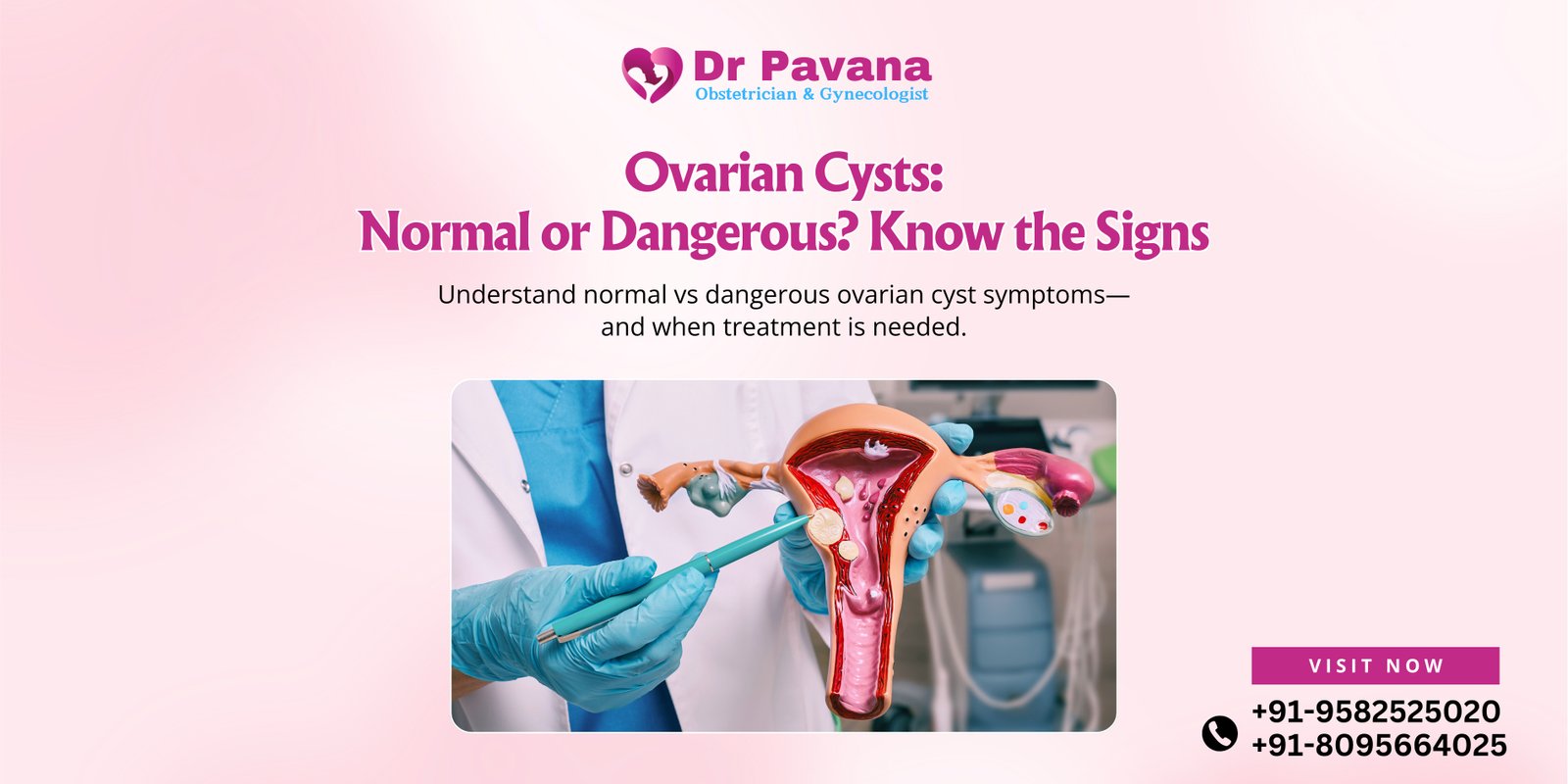
Ovarian Cysts: When They’re Normal & When They’re Dangerous | Dr Pavana
Many women feel scared when they hear they have ovarian cysts, but not all ovarian cysts are harmful or need surgery. Understanding ovarian cysts, when they are part of a normal cycle and when they may be dangerous, helps you know when to relax and when to see a gynecologist Dr Pavana in Noida promptly.
What exactly are ovarian cysts?
An ovarian cyst is a fluid-filled sac that develops in or on an ovary.
They are very common during the reproductive years and often disappear on their own without treatment.
Most ovarian cysts form as part of the normal menstrual cycle and are called functional cysts. Many simple ovarian cysts are small, painless and found incidentally on ultrasound during a routine check-up with a gynecologist like Dr Pavana.
When are ovarian cysts considered normal?
Functional cysts (like follicular and corpus luteum cysts) are usually harmless and resolve in a few weeks to months.
Small, simple cysts, often under 5 cm, rarely cause symptoms and are usually monitored rather than removed.
In many cases, your gynecologist may suggest a follow-up ultrasound after 6–12 weeks to confirm that a normal ovarian cyst has shrunk or disappeared. During this time, you may not need any specific ovarian cyst treatment except simple pain relief if you feel mild discomfort around your periods.
When might ovarian cysts be dangerous?
Suddenly, severe pelvic pain on one side.
Pain with fever, vomiting or dizziness that may suggest torsion or rupture.
Other worrying ovarian cyst symptoms include persistent bloating, pressure on your bladder or bowel, unexplained weight loss, or abnormal vaginal bleeding. These signs do not always mean cancer, but they are red flags that your cyst might be complex, growing or causing complications that need urgent evaluation by a specialist like Dr Pavana.
Types of cysts that need closer monitoring
Complex cysts containing solid areas, septations or blood may carry a higher risk and cannot be labelled normal without proper assessment.
Endometriomas, dermoid cysts and certain persistent cysts in postmenopausal women require detailed evaluation and sometimes surgery.
Your gynecologist evaluates ultrasound features, your age, symptoms and blood tests to decide whether an ovarian cyst is likely benign or suspicious. In some cases, MRI or referral to a gynecologic oncologist is advised, especially when cysts look complex or keep growing despite observation.
What size of ovarian cyst is worrying?
Small cysts (under 5 cm) are often watched, especially in younger women, and usually settle naturally.
Cysts larger than 5–10 cm, or those that keep increasing in size, carry a higher risk of torsion, rupture and pressure symptoms.
Very large or rapidly enlarging ovarian cysts may need surgical removal even if they appear non-cancerous, to prevent complications and to obtain a clear diagnosis. Dr Pavana will weigh the benefits of early surgery against the risks of waiting, based on your age, symptoms, fertility plans and overall health.
How are ovarian cysts diagnosed?
Pelvic examination and transvaginal ultrasound are the main tools used to assess ovarian cysts.
Sometimes blood tests like CA‑125 are ordered, especially in women over 40 or when cysts look complex on scan.
Your ultrasound report usually mentions the size, appearance, and type of cyst, which helps Dr Pavana decide if it fits the pattern of a normal functional cyst or something more serious. Follow-up scans are often advised to track changes over time instead of rushing into surgery for every cyst.
Treatment options: from watchful waiting to surgery
Many normal ovarian cysts need only observation, pain relief and periodic scans.
Hormonal pills may sometimes be used to reduce the chance of new functional cysts forming.
When a cyst looks dangerous, causes severe symptoms, or does not settle with time, laparoscopic (keyhole) surgery is often recommended as definitive ovarian cyst treatment. The goal for gynecologists like Dr Pavana is to treat the problem while preserving as much healthy ovarian tissue as possible, especially in women who still want to conceive.
When should you see a gynecologist urgently?
If you have sudden sharp pelvic pain, fainting, shoulder-tip pain, or heavy vaginal bleeding.
If pain is persistent, getting worse, or associated with fever, nausea or vomiting.
You should also seek timely care if your periods change dramatically, your abdomen looks swollen, or you have a family history of ovarian or breast cancer. Early evaluation allows Dr Pavana, a gynecologist in Noida, to decide whether your ovarian cyst is behaving like a normal functional cyst or could be dangerous and needs active treatment.
Key takeaway
Many ovarian cysts are a normal, temporary part of the menstrual cycle.
Some cysts are dangerous when they are large, painful, persistent, or have complex features on ultrasound.
If you are worried about an ovarian cyst or confused by your scan report, book a consultation with Dr Pavana in Noida to get a clear diagnosis, understand your ovarian cyst symptoms, and receive a personalized ovarian cyst treatment plan for your health and fertility goals.
Recent Blogs






Categories

Dedicated to compassionate, expert women’s healthcare, we support every stage of life with personalized gynecological and obstetric services.
Quick Links
Get In Touch
Clinic 1- The Derma & Gynae Clinic
A-59, Block-A Sector-41, Noida
(Near Sector-41, Market)
Contact No.: 7982301616
Clinic 2- Truecare Clinic
UGF -11 Saviour Green Arch Market Near Ek Murti Chowk, Noida Extention
Contact No.: 9582525020
All Rights Reserved.