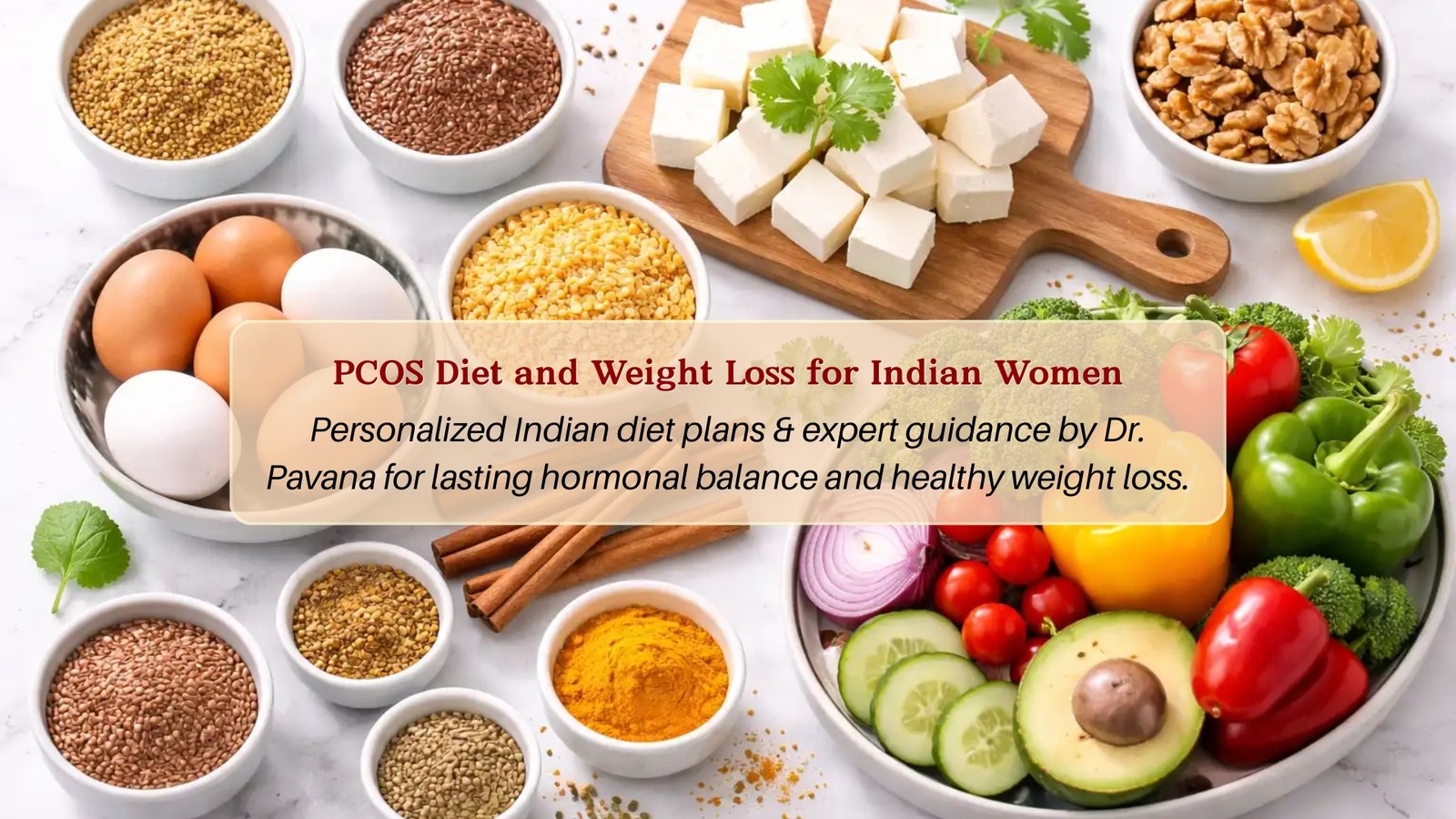
Many women search for a PCOS diet and weight loss for Indian women and end up with confusing, extreme diet charts that are hard to follow. PCOS (polycystic ovary syndrome) is common among Indian women and is strongly linked with insulin resistance, weight gain around the tummy, irregular periods and difficulty losing weight. Gynaecologist Dr Pavana H.N., practising in Noida and Greater Noida West, explains a realistic, sustainable PCOS diet and lifestyle plan designed for Indian food habits, so you can improve hormones and weight without crash dieting.
How PCOS, diet and weight are connected
In PCOS, the body often does not respond properly to insulin, the hormone that controls blood sugar. This insulin resistance makes it easier to gain weight and harder to lose it, especially around the abdomen, which can worsen male‑pattern hormones and irregular periods. Research shows that even a 5–10% weight loss in women with overweight PCOS can improve cycles, ovulation and symptoms. That is why focusing on a balanced PCOS diet and weight loss for Indian women is one of the first steps doctors recommend, along with medicines when needed.
The goal is not a tiny waist in two weeks, but stable blood sugar, fewer cravings, better energy and gradual fat loss. For lean women with PCOS, improving food quality and activity still helps hormones, even if weight loss is not the main target.
Principles of a gynaecologist-approved PCOS diet for Indian women
When doctors talk about a good PCOS diet, they focus on three big ideas rather than a rigid chart:
Prefer low‑GI (low glycaemic index) carbs like whole grains, millets and pulses instead of white rice, maida and sugary snacks.
Add enough protein and fibre to every meal to keep you full and reduce cravings.
Use healthy fats and traditional Indian foods in moderation rather than eliminating everything you enjoy.
Low‑GI diets and Mediterranean‑style patterns (more vegetables, pulses, nuts, seeds and good fats) have been shown to improve insulin sensitivity, support weight loss and even restore more regular periods in women with PCOS. For Indian women, this can be done while still eating roti, dal, sabzi and typical home food.
Foods to focus on in a PCOS diet (Indian kitchen-friendly)
For PCOS diet and weight loss for Indian women, you do not need fancy products; most help comes from basic kitchen staples. Helpful options include:
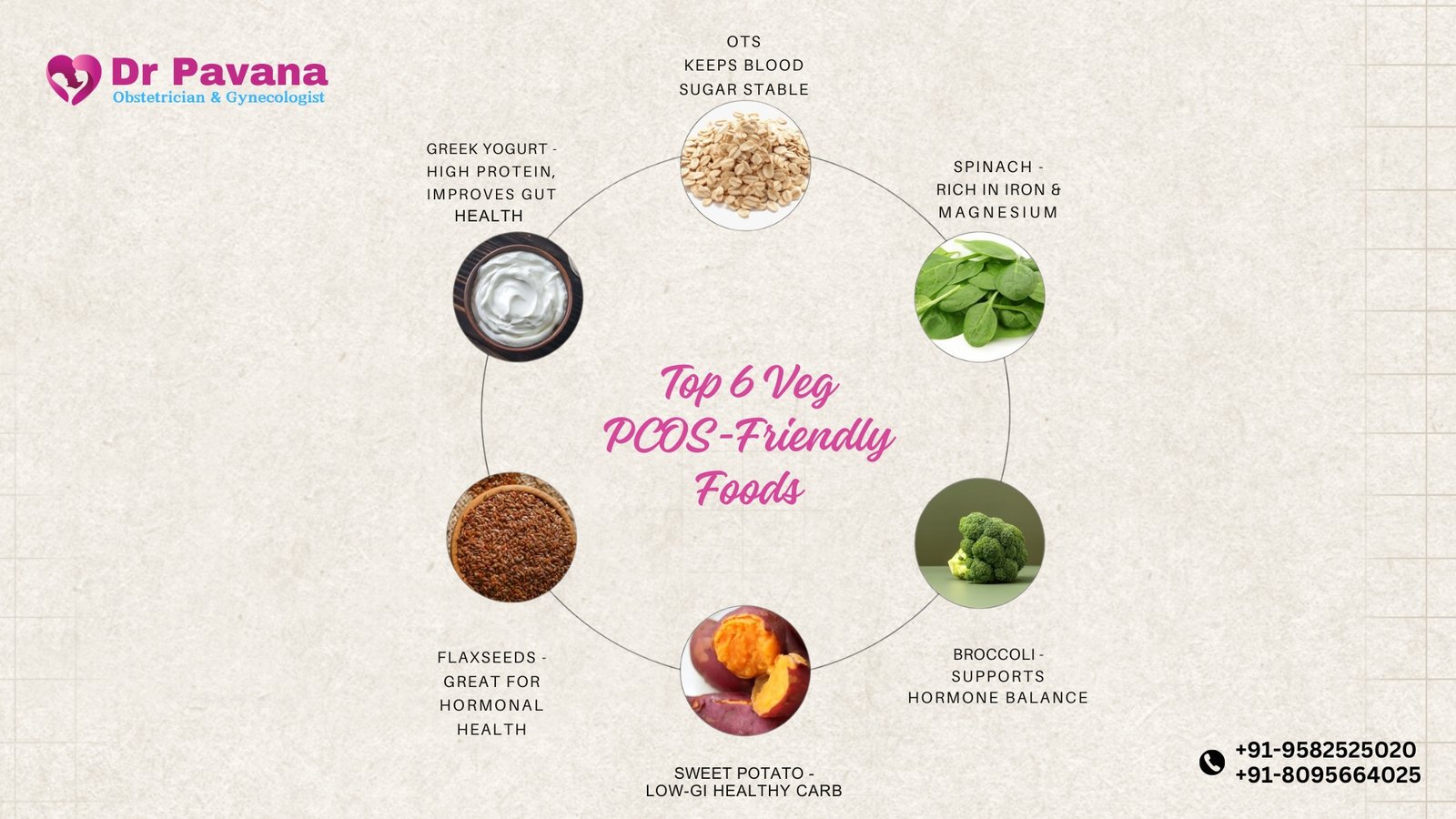
Whole grains and millets: phulka roti, multigrain atta, daliya, brown or red rice, poha with vegetables, rolled oats, jowar, bajra and ragi.
Pulses and legumes: moong dal, masoor, chana dal, rajma, chole, lobia and sprouts add protein and fibre to meals.
Lean proteins: eggs, paneer in moderation, curd/dahi, tofu, grilled chicken or fish, and combinations of dal + dahi for vegetarians.
Vegetables: at least half your plate as sabzi and salad, especially green leafy vegetables, bhindi, lauki, tori, tinda, beans, broccoli, cauliflower and carrots.
Healthy fats: small amounts of nuts (almonds, walnuts), seeds (flax, pumpkin, sunflower), and cold‑pressed oils instead of repeated deep‑frying.
These choices slow down sugar spikes, keep you satisfied, and help hormones stabilise over time.
Foods to limit for PCOS weight loss
A gynaecologist-approved PCOS diet and weight loss for Indian women does not ban food groups but asks you to limit:
Sugary drinks, sweets, pastries, cakes, mithai and biscuits.
Large portions of white rice, maida‑based items (naan, bhatura, samosa, bakery snacks).
Frequent fried fast food, chips and packaged namkeen.
Very high‑sugar fruits in large quantities (juices, fruit concentrates) instead of whole fruits.
You can still enjoy occasional treats, but they should be small, infrequent and balanced with an otherwise healthy pattern.
Sample one‑day Indian PCOS diet for weight loss
This is an example to understand structure; Dr Pavana would customise it based on your weight, work and medical history.
Morning: Warm water with lemon or jeera, plus a small handful of soaked nuts or seeds.
Breakfast: Vegetable moong dal chilla with dahi, or vegetable upma/poha with extra peas and beans.
Mid‑morning: One whole fruit (apple, guava, orange, pear) and a glass of water.
Lunch: 2 phulkas (no ghee) or 1 cup brown rice, dal or rajma, a big portion of sabzi, salad and a small bowl of curd.
Evening snack: Roasted chana, sprouts chaat, or makhana; tea/coffee with little or no sugar.
Dinner: 1–2 phulkas or millet roti, dal or grilled paneer/chicken, mixed vegetables and salad.
Late snack (if needed): Herbal tea or warm haldi milk without sugar.
The pattern is: controlled carbs, enough protein, plenty of vegetables and regular meal timing. Crash fasting or skipping meals often backfires by increasing cravings later at night.
Exercise and lifestyle tips with PCOS diet
Weight loss with PCOS is not only about food. Guidelines recommend at least 150 minutes per week of moderate exercise (like brisk walking, cycling, dancing) for general health, and around 250 minutes per week for stronger weight‑loss results, plus two days of strength training. Strength exercises (squats, lunges, light weights or resistance bands) help build muscle, which increases metabolism and improves insulin sensitivity.
For busy Indian women, this might look like a 30–40 minute walk most days, plus 2–3 short home workouts using body‑weight moves. Good sleep and stress management (yoga, meditation, hobbies) also support PCOS hormone balance and make sticking to your PCOS diet easier.
Common mistakes in PCOS diet and weight loss for Indian women
Many patients who meet Dr Pavana in Noida share similar struggles:
Following extremely low‑calorie crash diets causes weakness and hair fall, but no sustainable weight loss.
Skipping breakfast and eating most calories late at night.
Drinking calorie‑heavy coffees, teas and juices without counting them as “food.”
Over‑relying on “PCOS supplements” while ignoring daily diet and movement.
A realistic PCOS diet and weight-loss plan for Indian women focuses on consistent, moderate changes you can maintain for months, not on quick fixes for one week.
When to see a gynaecologist for PCOS diet and weight issues
You should consult a gynaecologist like Dr Pavana H.N. if you notice:
Irregular periods, especially cycles more than 35 days apart.
Sudden or stubborn weight gain around the abdomen.
Acne, oily skin, or increased facial/body hair.
Difficulty losing weight despite sincere efforts.
Your doctor will confirm if you have PCOS, rule out other hormonal problems, and then create a combined plan of PCOS diet, weight‑loss strategy, exercise and medicines where needed. This is much safer than following random internet charts that ignore your medical history.
Frequently asked questions – PCOS diet and weight loss for Indian women
Can I lose weight with PCOS or is it impossible?
Yes, weight loss is possible with PCOS; even a 5–10% reduction in body weight can improve periods and hormones when you follow a structured diet and exercise plan.
Do I have to cut all carbs in a PCOS diet?
No, you do not need to remove all carbs; focus on low‑GI whole grains and millets in controlled portions instead of white rice, sugar and refined flour.
Is intermittent fasting good for PCOS?
Some women may benefit from gentle time‑restricted eating, but very long fasts or extreme fasting windows can worsen cravings and may not suit everyone, so always discuss with your doctor.
How long will it take to see changes with a PCOS diet plan?
Most women who consistently follow a balanced PCOS diet and regular activity notice better energy and fewer cravings in a few weeks, while weight and cycles may take a few months to improve.
Recent Blogs





Categories

Dedicated to compassionate, expert women’s healthcare, we support every stage of life with personalized gynecological and obstetric services.
Quick Links
Get In Touch
Clinic 1- The Derma & Gynae Clinic
A-59, Block-A Sector-41, Noida
(Near Sector-41, Market)
Contact No.: 7982301616
Clinic 2- Truecare Clinic
UGF -11 Saviour Green Arch Market Near Ek Murti Chowk, Noida Extention
Contact No.: 9582525020
All Rights Reserved.