Why the Thyroid Matters More in Pregnancy Than at Any Other Time
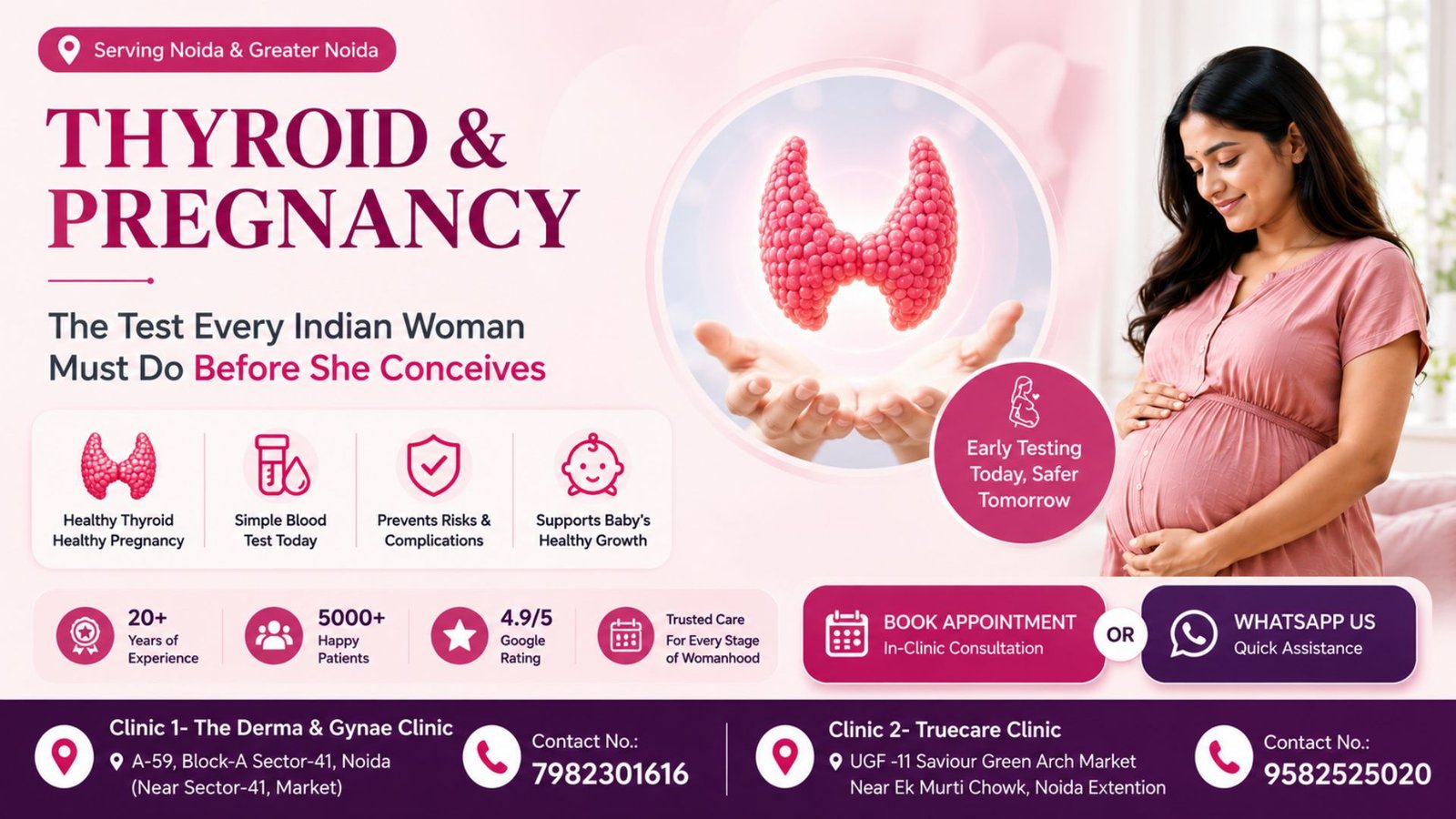
The thyroid is a butterfly-shaped gland at the base of the throat. It produces two hormones, T3 (triiodothyronine) and T4 (thyroxine), that regulate metabolism, energy production, heart rate, body temperature, mood, and, most critically during pregnancy, the development of the foetal brain and nervous system.
Thyroid disease in pregnancy represents a significant endocrine challenge that affects both maternal and foetal health in ways that extend well beyond the pregnancy itself.
The reason the thyroid matters so acutely during pregnancy is straightforward: a baby's own thyroid gland is not functional until approximately 12 weeks of gestation. For the entire first trimester and beyond, the developing baby depends entirely on the mother's thyroid hormones for brain development, nerve formation, and organ maturation. When the mother's thyroid is not producing adequate hormones during this window, the baby's development is directly affected. This consequence is not reversible after the fact. It is preventable before the fact, which is why testing matters so much.
How Common Is Thyroid Disease in Pregnant Women in India?
The overall prevalence of thyroid disorders in pregnancy across India has varied from 13% to over 33%, depending on the diagnostic criteria applied and the region studied. In North India, specifically, which includes Noida, Greater Noida West, and Noida Extension, the prevalence sits at the higher end of this range. Several factors contribute to this: genetic predisposition to autoimmune thyroid disease in the Indian population, iodine deficiency in specific dietary patterns, and the high prevalence of PCOS and PMOS (both of which are associated with thyroid dysfunction and frequently coexist with it).
Hypothyroidism in pregnancy is the most commonly occurring thyroid disease in India, with overt hypothyroidism estimated between 2% and 6% and subclinical hypothyroidism, where TSH is elevated but T4 is still in range, affecting a considerably larger proportion of pregnant women.
The clinical challenge with subclinical hypothyroidism is precisely that it produces no obvious symptoms. A woman can feel completely well, with no fatigue beyond normal pregnancy tiredness, no cold sensitivity, no obvious hair thinning, and still have a TSH level that is above the safe threshold for the first trimester. Symptom-watching is not a reliable screening strategy. A blood test is the only one that works.
Hypothyroidism vs Hyperthyroidism in Pregnancy: The Full Explanation
These are two distinct conditions that require completely different management. Confusing them is one of the most common sources of patient anxiety, because a woman who has been told she has a thyroid problem during pregnancy often does not know which direction her levels have gone or what that means.
Hypothyroidism Underactive Thyroid
Hypothyroidism means the thyroid is producing insufficient thyroid hormone. The pituitary gland compensates by releasing more TSH to try to stimulate the thyroid to produce more, which is why an elevated TSH reading indicates hypothyroidism. The most common cause in reproductive-age Indian women is Hashimoto's thyroiditis, an autoimmune condition in which the immune system attacks the thyroid gland.
Untreated or inadequately treated overt hypothyroidism during pregnancy is associated with an increased risk of spontaneous miscarriage, perinatal death, pre-eclampsia, pregnancy-induced hypertension, preterm birth, low birth weight, and postpartum haemorrhage.
Symptoms of hypothyroidism include persistent fatigue, unexplained weight gain, cold sensitivity, constipation, hair thinning, dry skin, and low mood. However, as noted above, subclinical hypothyroidism, the most common form in pregnancy, typically produces none of these symptoms, which is what makes pre-conception and first-trimester screening so important.
Hyperthyroidism Overactive Thyroid
Hyperthyroidism means the thyroid is producing excess thyroid hormone. TSH will be low as the pituitary gland reduces its stimulation signal. The most common cause during pregnancy is Graves' disease, an autoimmune condition in which antibodies called TSH receptor antibodies (TRAb) stimulate the thyroid to overproduce.
Untreated overt hyperthyroidism during pregnancy, commonly due to Graves' disease, is associated with increased risks of pre-eclampsia, preterm birth, foetal growth restriction, and maternal heart failure.
Symptoms include unexplained weight loss despite good appetite, palpitations, heat sensitivity, anxiety, trembling hands, and diarrhoea. These symptoms can be difficult to distinguish from normal pregnancy symptoms, which is another reason laboratory testing is essential rather than optional.
What Is Hashimoto's Thyroiditis?
Hashimoto's thyroiditis is the most common cause of hypothyroidism in women of reproductive age in India. It is an autoimmune condition where the immune system produces antibodies called thyroid peroxidase antibodies (TPO antibodies) that gradually damage the thyroid gland, reducing its ability to produce hormones.
Up to 18% of pregnant women carry TPO antibodies. Women with TSH levels between 2.5 and 4.0 mIU/L who also have positive TPO antibodies may benefit from levothyroxine supplementation, which improves fertility rates, particularly in unexplained infertility, and reduces miscarriage rates.
This is a clinically important distinction: a woman with a TSH of 3.2 and no TPO antibodies may be safely observed without medication. The same TSH of 3.2 in a woman with positive TPO antibodies may warrant treatment. This is why thyroid management during pregnancy cannot be reduced to a single TSH number; the full clinical picture, including antibody status, matters.
TSH Levels During Pregnancy: What the Numbers Actually Mean for Indian Women
This is the most frequently searched thyroid-pregnancy question in India, and it deserves a precise answer.
The standard adult reference range for TSH, typically 0.5 to 5.0 mIU/L on most laboratory reports, does not apply during pregnancy. Pregnancy-specific ranges are stricter, and they differ by trimester. Using the non-pregnant adult range to assess a pregnant woman's TSH results is a common and consequential clinical error.
A systematic review of Indian data found that the upper normal TSH reference range during pregnancy in Indian women can extend to 5 to 6 mIU/L, which is higher than the ranges typically used in Western guidelines. Indian women have trimester-specific TSH ranges of approximately 0.09 to 6.65 mIU/L in the first trimester, 0.39 to 6.61 mIU/L in the second trimester, and 0.70 to 5.18 mIU/L in the third trimester. These population-specific ranges are important; they mean that a TSH of 5.5 in an Indian woman in the first trimester may not require treatment, while the same value in a Western reference range would be flagged as abnormal.
The practical guidance from current evidence, including the 2026 ATA guidelines, is as follows:
Pre-conception target: In women with known hypothyroidism or subclinical hypothyroidism, a pre-conception TSH of 2.5 mIU/L or below is recommended, as this offers protection against hypothyroidism developing or worsening in early pregnancy.
First trimester: Women found to have a TSH level greater than 10 mIU/L in the first trimester of pregnancy should be treated for hypothyroidism. Women with a TSH of 2.5 mIU/L or below do not need levothyroxine treatment. The management of TSH values between these two points depends on TPO antibody status and clinical presentation, a decision made by the treating doctor, not by the number alone.
The most important practical message: the TSH reference range printed on a laboratory report is the standard adult range, not the pregnancy-specific range. A result that appears within the normal printed range on the lab report may still be above the recommended threshold for the first trimester of pregnancy. Always ask your gynaecologist to interpret your TSH result using the correct pregnancy trimester reference range, not the number printed on the report.
The Thyroid-Fertility Connection Before You Are Even Pregnant
This section of the thyroid conversation is most frequently skipped, yet it is clinically the most important for women planning to conceive.
Thyroid dysfunction does not begin during pregnancy. It is often present, untested, and unmanaged for months or years beforehand. And when thyroid levels are out of range at the time of conception, the consequences can include difficulty conceiving in the first place, early miscarriage before a positive test is even obtained, and disrupted foetal development in the days before any pregnancy test would turn positive.
Hypothyroidism suppresses ovulation by disrupting the normal hormonal cascade that triggers egg release. Elevated TSH is associated with irregular periods, anovulatory cycles, and reduced fertility. Women with TSH above 4.0 who are treated with levothyroxine have better pregnancy rates and lower miscarriage rates than untreated women with the same TSH levels.
Most fertility specialists in India treat TSH above 2.5 in women who are trying to conceive. The treatment with levothyroxine is straightforward, safe, and effective. Most women require 25 to 75 micrograms daily, taken on an empty stomach in the morning, with TSH rechecked after four to six weeks.
Getting the thyroid right before pregnancy is categorically safer and more effective than managing an abnormality discovered after conception. This is why pre-conception thyroid screening, a simple, inexpensive blood test, is among the most valuable things a woman planning pregnancy can do.
The 2026 ATA Guideline Update: What Changed and Why It Matters
The American Thyroid Association published updated guidelines for thyroid disease and pregnancy in May 2026. These guidelines contain important changes that affect how thyroid status is managed in women planning pregnancy and those who are already pregnant.
The 2026 guidelines represent a deliberate pull-back from over-medicating borderline or mildly abnormal findings. The guidelines explicitly acknowledge that mild thyroid abnormalities often normalise on their own with repeat testing, and that treating them without confirmation may carry risks without meaningful benefit. The consistent instruction throughout the document is that before starting levothyroxine for mild hypothyroidism or subclinical hypothyroidism, clinicians should confirm the abnormality persists on a second test. A single borderline TSH reading is not, by itself, an automatic trigger for medication.
The 2026 guidelines also firmly recommend against prescribing levothyroxine to euthyroid women, meaning normal-thyroid women who are TPO antibody positive and experiencing infertility, planning IVF, or who have had recurrent miscarriages. The recommended approach for this group is monitoring thyroid function every three to six months during the pre-conception period, given a 7 to 9% risk that these women will develop hypothyroidism before or during pregnancy.
This update is directly relevant to women in Noida who may have been placed on thyroid medication following a single borderline test result. The 2026 guidance is clear: confirm the abnormality, check TPO antibodies, and make the medication decision based on the complete picture, not a single number.
Is Levothyroxine Safe During Pregnancy?
Yes, and this is the question that causes the most unnecessary anxiety in women who are pregnant and on thyroid medication.
Levothyroxine is the synthetic version of the T4 hormone that the thyroid normally produces. It is not a drug that affects the baby in the way that many medications do. It is a hormone replacement that brings the mother's levels to where they should naturally be. Decades of evidence and the explicit endorsement of every major obstetric and endocrinology body internationally confirm its safety throughout all three trimesters.
The drug of choice for treating hypothyroidism in pregnancy is synthetic thyroxine, levothyroxine, which is safe, effective, and necessary for providing the foetus with adequate thyroid hormones.
Pregnant women with pre-existing hypothyroidism usually require a 30 to 50% dose increase immediately on confirmation of pregnancy. This increase is expected and routine; it does not mean the thyroid has worsened. It means the body now needs more hormones to support both the mother and the developing baby. Women should be advised to immediately increase their levothyroxine dose as soon as they have a positive pregnancy test by doubling the dose on two days of each week, then confirming the adjusted dose with their doctor at the earliest opportunity.
The one thing that is never safe is stopping levothyroxine without medical guidance during pregnancy. Women who feel well and decide independently to discontinue their medication once pregnant are placing their baby's neurological development at significant and entirely preventable risk.
What to Eat During Pregnancy When You Have Thyroid Disease
Diet is one of the most searched thyroid-pregnancy topics in India, and one of the least specifically answered in antenatal consultations. Here is evidence-based guidance:
Iodine: Iodine is essential for thyroid hormone production. Most standard prenatal vitamins contain adequate iodine. Use iodised salt consistently in cooking. Severe iodine deficiency is a contributing factor to thyroid disorders in parts of India, and pregnancy significantly increases iodine requirements.
Soy and raw cruciferous vegetables: Excessive soy products and large quantities of raw cruciferous vegetables such as cabbage, cauliflower, and broccoli may affect thyroid function when consumed in large amounts. They do not need to be eliminated, but moderation is sensible when thyroid levels are being actively managed.
Calcium and iron supplements: Both calcium and iron can interfere with levothyroxine absorption when taken at the same time. Levothyroxine should always be taken first thing in the morning on an empty stomach, at least 30 to 60 minutes before any food, other medications, or supplements.
Balanced diet: A diet rich in whole grains, fruits, vegetables, nuts, seeds, and lean proteins supports overall thyroid function and pregnancy health. There is no evidence that any specific food cures or resolves thyroid disease during pregnancy, but nutritional support alongside medication and monitoring is always beneficial.
Postpartum Thyroiditis: What Happens After Delivery
This topic is almost absent from the antenatal conversation in India, yet it affects a meaningful proportion of women who have had thyroid issues or TPO antibodies during pregnancy.
Postpartum thyroiditis is an inflammation of the thyroid that occurs in the months following delivery. It typically follows a pattern of initial hyperthyroidism, which can cause palpitations, anxiety, and weight loss, followed by hypothyroidism, which produces fatigue, low mood, and difficulty losing weight. Many women attribute these symptoms to the exhaustion of new motherhood rather than recognising them as a thyroid condition.
Women who had thyroid dysfunction during pregnancy, or who were found to have positive TPO antibodies at any point, should have their thyroid function retested at six weeks postpartum. Early identification of postpartum thyroiditis allows prompt treatment and prevents months of unnecessary suffering.
What Tests to Expect at a Pre-Conception or Antenatal Thyroid Consultation
A gynaecologist or obstetrician managing thyroid health in relation to pregnancy will typically request:
TSH is the primary screening test either at a pre-conception consultation or at the first antenatal visit in the first trimester. If TSH is abnormal, Free T4 (fT4) is used to assess actual hormone levels. TPO antibodies are thyroid peroxidase antibodies, particularly if TSH is in the borderline range or if there is a personal or family history of autoimmune disease. These determine whether borderline TSH values require treatment. Thyroid function tests are performed every four to six weeks through the first 20 weeks of pregnancy in women on levothyroxine, then again at 28 weeks. Postpartum thyroid function at six weeks after delivery in women who had any thyroid abnormality during pregnancy.
For women searching for a thyroid in pregnancy, a doctor in Noida, whether they are planning to conceive, currently pregnant, or concerned about a recent test result, the most useful first step is a consultation where the results are interpreted in the context of the full clinical picture: TSH, fT4, TPO antibodies, current symptoms, obstetric history, and family history. A number on a lab report is not a diagnosis. A clinical conversation with a gynaecologist who understands the complete picture is.
Book a Consultation with Dr Pavana H.N.
Planning to conceive? Already pregnant? Concerned about a thyroid result? Do not wait until the second trimester to find out.
Dr Pavana H.N., Gynaecologist and Obstetrician · 14 years of experience · Pre-conception thyroid screening and counselling · Antenatal thyroid monitoring across all three trimesters · High-risk pregnancy management, including thyroid, gestational diabetes, and pre-eclampsia · Postpartum thyroid review
Clinic 1: The Derma and Gynae Clinic, Basement, A-59, Sector 41, near COVID Hospital, Block A, Noida 201303.
Clinic 2: Truecare Clinic, Shop No. 11, UGF, Saviour Green Arch Market, above Apollo Pharmacy, near Ek Murti Chowk, Techzone 4, Greater Noida 201318
Book Appointment: drpavanaappointments.setmore.com WhatsApp: +91-9582525020
Frequently Asked Questions
Q1. Can I get pregnant if I have thyroid disease?
Yes. Most women with thyroid disorders, both hypothyroidism and hyperthyroidism, can conceive naturally and carry a healthy pregnancy when the condition is properly diagnosed and managed. The key is to have thyroid levels in the appropriate range before conception and to maintain them through regular monitoring throughout pregnancy. Uncontrolled thyroid dysfunction at the time of conception is the primary risk factor, not the diagnosis itself.
Q2. What is the normal TSH level during pregnancy in India?
Indian women have different TSH reference ranges from Western populations. Based on Indian-specific data, the broadly accepted ranges are: first trimester 0.09 to 6.65 mIU/L; second trimester 0.39 to 6.61 mIU/L; third trimester 0.70 to 5.18 mIU/L. The standard adult range printed on a laboratory report is not appropriate for interpreting pregnancy TSH values. Always ask your gynaecologist to confirm your result against the correct pregnancy-specific and trimester-specific reference range.
Q3. Is levothyroxine safe to take during pregnancy?
Yes. Levothyroxine is the treatment of choice for hypothyroidism in pregnancy and has been confirmed safe throughout all three trimesters by every major international obstetric and endocrinology authority. It is a hormone replacement, not a drug with foetal effects. Stopping levothyroxine without medical guidance during pregnancy is not safe and carries a genuine risk to the baby's neurological development. Most women require a 30 to 50% dose increase on confirmation of pregnancy, which is routine and expected.
Q4. What are TPO antibodies, and why do they matter in pregnancy?
TPO antibodies, thyroid peroxidase antibodies, are antibodies produced by the immune system that attack the thyroid gland. They are the marker of Hashimoto's thyroiditis and are present in up to 18% of pregnant women. Their presence is clinically important because women with positive TPO antibodies face a higher risk of miscarriage and pregnancy complications, independent of their actual TSH level. Women with borderline TSH who also have positive TPO antibodies may benefit from levothyroxine treatment even at TSH levels that would not normally require medication. TPO antibody testing should be done alongside TSH whenever a borderline result is found.
Q5. Should I get a thyroid test before trying to conceive?
Yes, strongly. A preconception TSH test is one of the most valuable and inexpensive things a woman can do before trying to get pregnant. Correcting a thyroid abnormality before conception is safer and more effective than managing it after a pregnancy is confirmed. Most gynaecologists providing pre-conception counselling include TSH as part of the standard pre-conception blood panel alongside vitamin D, iron studies, blood sugar, and rubella status.
Q6. Can thyroid disease cause miscarriage?
Uncontrolled hypothyroidism, particularly when TSH is significantly elevated, is associated with an increased risk of early miscarriage. Women with positive TPO antibodies also have a higher miscarriage risk, even when TSH appears within the normal range. When thyroid disease is detected and properly managed before or early in pregnancy, the miscarriage risk reduces substantially. Women with a history of recurrent miscarriage should always have a full thyroid panel, including TSH, free T4, and TPO antibodies, included in their investigation.
Q7. How does thyroid disease affect the baby's brain development?
The developing baby depends entirely on the mother's thyroid hormones for brain and nervous system development throughout the first trimester because the baby's own thyroid gland is not functional until approximately 12 weeks of gestation. Insufficient thyroid hormone during this critical window is associated with impaired neurodevelopmental outcomes in the child. This is why first-trimester thyroid screening and prompt treatment, when indicated, are among the most clinically important actions in early pregnancy management.
Q8. What is postpartum thyroiditis?
Postpartum thyroiditis is a thyroid inflammation that affects some women in the months after delivery. It typically follows a two-phase pattern: initial hyperthyroidism causing palpitations, anxiety, and weight loss, followed by hypothyroidism causing fatigue, low mood, and difficulty losing post-pregnancy weight. Many women attribute these symptoms to exhaustion from new motherhood. Women who had thyroid dysfunction during pregnancy, or who were found to have TPO antibodies, should have thyroid function retested at six weeks postpartum to detect postpartum thyroiditis early.
Q9. What happens to my levothyroxine dose after delivery?
Thyroid hormone requirements typically return toward pre-pregnancy levels after delivery. The dose increase made at the start of pregnancy is usually stepped back down after the baby is born, and TSH is retested at six weeks postpartum to confirm the appropriate dose. This is a routine part of postpartum thyroid management and does not indicate that the underlying condition has changed.
Q10. Where can I get thyroid testing and management during pregnancy in Noida?
Dr Pavana H.N. provides complete thyroid screening and management as part of her pre-conception counselling and antenatal care at The Derma and Gynae Clinic, Basement, A-59, Sector 41, near COVID Hospital, Block A, Noida 201303, and Truecare Clinic, Shop No. 11, UGF, Saviour Green Arch Market, above Apollo Pharmacy, near Ek Murti Chowk, Techzone 4, Greater Noida 201318. She monitors TSH, free T4, and TPO antibodies throughout pregnancy, adjusts levothyroxine dosage at each trimester, and reviews thyroid function again at six weeks postpartum.